Researched & Written by Scott Hamilton, Lodi Preservation Alliance
In the winter of 1911, Lodi’s city founders had concluded that their young town had grown to a size and complexity that called for a centralized seat of operations. In the five years since its incorporation at the end of 1906, Lodi had grown into a town of about 3,000 residents and the civic-mindedness of its citizens and leaders in the preceding years had produced many improvements that had enriched the community including:
Establishment of the Opera House in 1905
Formation of the Lodi Improvement Club (later to become the Lodi Women’s Club) in 1906
Establishment of passenger train service by the Central Traction Company with routes to and from Sacramento and Stockton in 1907
Construction of the Lodi Arch in 1907
Hosting of the Tokay Carnival (which would become Lodi’s Grape Festival in later years) in 1907
Opening of the Carnegie Library in 1910
Acquisition and construction of Lodi’s first water, gas, electric and sewer services in 1910
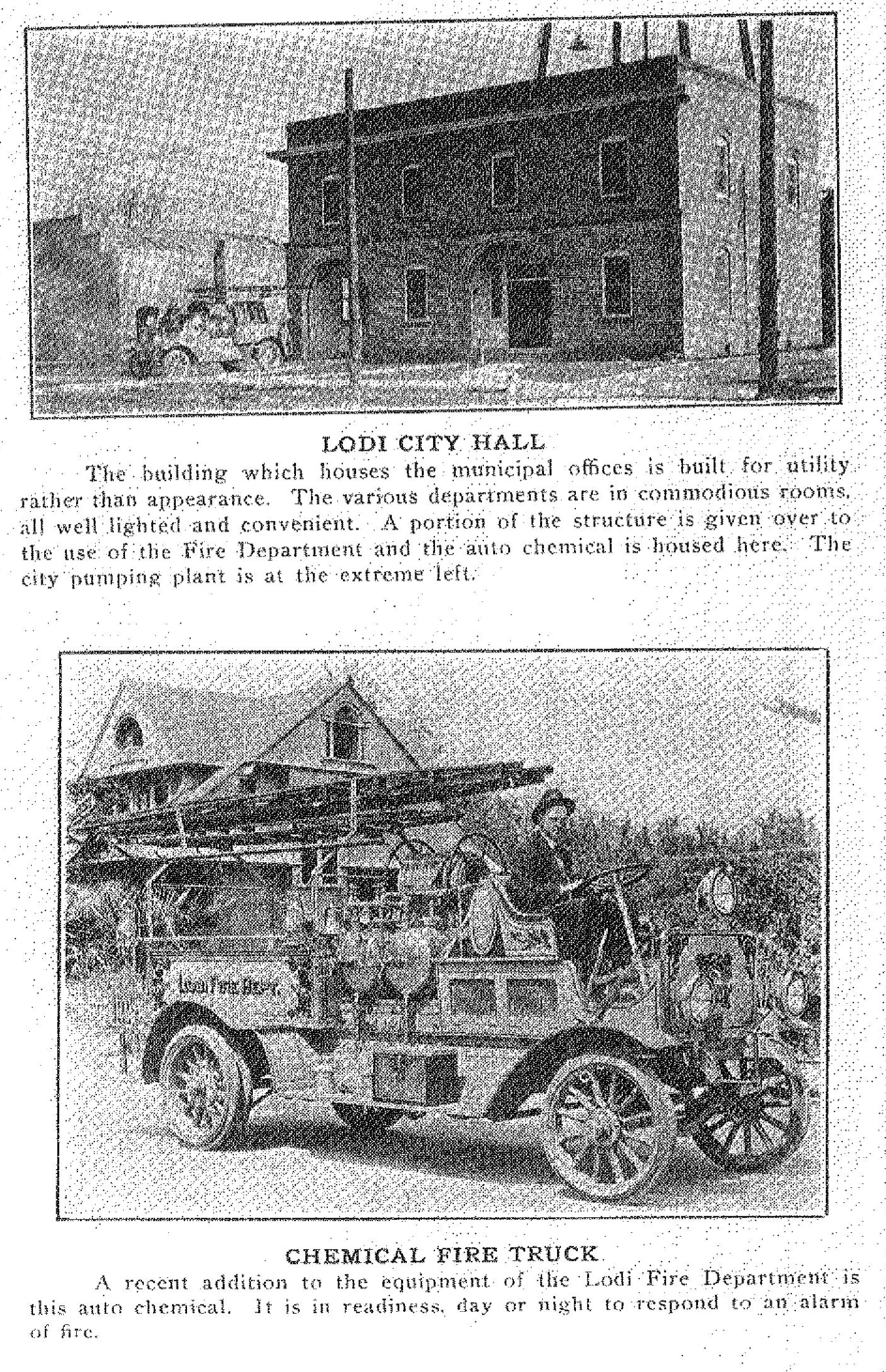
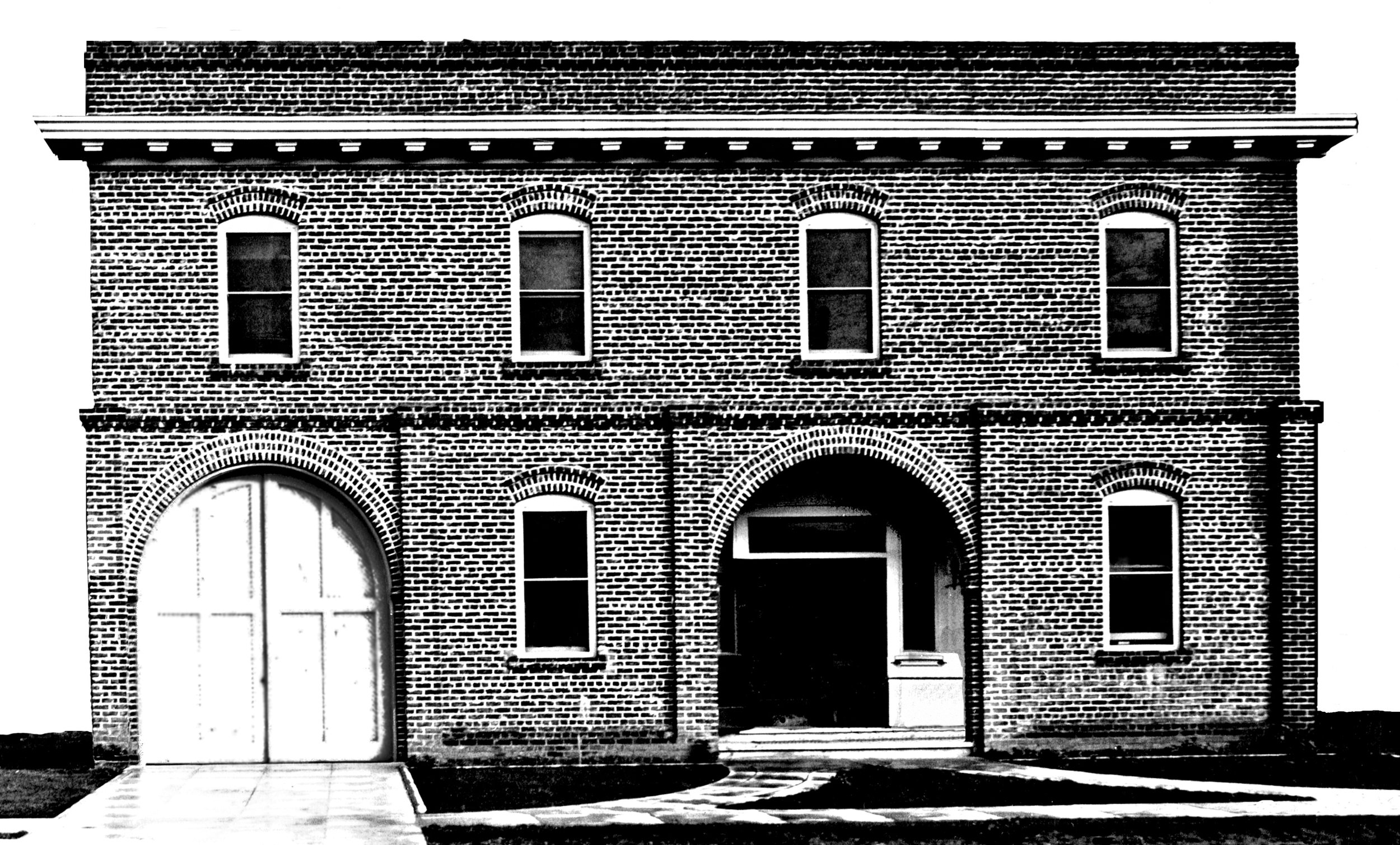
Using a rough pencil sketch laid out by the City Clerk, John M. McMahon, Superintendent William T. Gregg developed and submitted for City approval the detailed plans and specifications for the “New Municipal Building” on January 22, 1912 for the sum of $50. In 1912, the 59-year-old Gregg was a long-time resident of Lodi, having moved here in 1887 from Tennessee, and lived at 215 S. Pleasant Ave with his wife and three boys and was a well-known carpenter and cabinet maker.
After approval of the plans by the City’s Trustees on January 22nd, the City Clerk was instructed to advertise for bids to be submitted by, “8:00 o’clock P.M. on February 13th.” These bids were not to include foundation, painting, hardware, plumbing, vault door and wiring since it was thought that those, “…would be done by day labor and by the city’s paid employees, among whom are a plumber and an electrician.” (Lodi Sentinel, February 15, 1912).
By the deadline of February 13th, the City had received bids from only two contractors. The first was from W.D. Voorhies & Son which was subsequently rejected because the bid was not accompanied by a certified check in the amount of 10% of the bid amount. They had included, with their bid, a non-certified check of $350 instead of a certified check for $389 (10% of their bid for $3,893). Additionally, they had not included a sample of the brick to be used.
The second contractor’s bid was submitted by Charles Inlow Rice for brick construction of the building for $3,998 and was accepted by the City Trustees on February 14th. A contract was entered into with Rice at the end of February after he put up two cash bonds for $2,000 each. The first bond was for the, “…faithful performance of the contract to build the city hall.” and the second for the, “…payment of material men and labor.”
In 1912, Charles Rice was a 24-year-old civil engineer and architect living with his mother and two sisters at 419 E Locust. Due to the long illness and subsequent passing of his father, he had only attended school through the first year of high school when he was compelled to go to work to support the family. In 1906, at the age of 18, while he was earning $1.50 an hour as an order clerk in a general merchandise store in Lodi, he enrolled in a correspondence program called the “Complete Architectural Course”. Using this training as his foundation, he became an architect and builder and would go on to build several buildings throughout Lodi. However, at this time, his experience in the building trade was somewhat limited.
Due to the youth and inexperience of Rice, the City Trustees hired Superintendent Gregg to supervise the construction of the building for, “3% of the cost of $4,000,” including the $50 already paid for the designs and specifications for the building. To oversee this process a Building Committee, consisting of Trustees Charles A. Rich and Frank O. Hale, was established.
In the first weeks of March, construction commenced on the new building and the undertaking got off to a bit of a rocky start when Superintendent John A. Henning was directed by the City Trustees to, “…purchase cement for the foundation of the building where he could get it the cheapest.” Unsurprisingly, Rice was swift to deny any responsibility for the foundation or any consequent damage to the building.
In May, after Rice had been paid a milestone payment for successful completion of the roof, Gregg reported to the City Trustees that the building was progressing slowly and that he had condemned the roof. He informed the Trustees that the Paraffine Paint Company had agreed to replace it. (As a side note, Paraffine was a producer of asphalt paint that was used to waterproof wood and metal roofing. At their peak, they occupied 90 buildings on 38 acres in Emeryville.
In June, after Rice requested an extension of 30 days, the Trustees only granted him a 15-day extension. Then, in July, Superintendent Gregg declined to approve the claims of the contractor Rice, stating he could only approve the roof, plastering and carpenter work. After the matter was referred to the Building Committee, the new Municipal Building was accepted and they approved final payment, as well as bond reimbursements, to Rice.
The finishing touches were put on the building including the installation of a railing in the assembly hall, installation of a vault, a paint job by C. E. Pickering for $94.50 and furnishings by the two Trustees, Charles Rich and Frank Hale. Finally, the first City Council meeting was held in the building on August 5th where various topics were discussed and plans were approved including the purchase of a new fire truck (a $5,950 Seagrave), the hiring of a janitor (J. W. McAfee at $15 per month) for the new building, and the granting of a permit for, “C. I. Rice. [to build a] dwelling on lot 10 block 2 Larsons Pine St. Addition.” This dwelling was to become the residence of the Mondavi family at 415 W Pine Street.
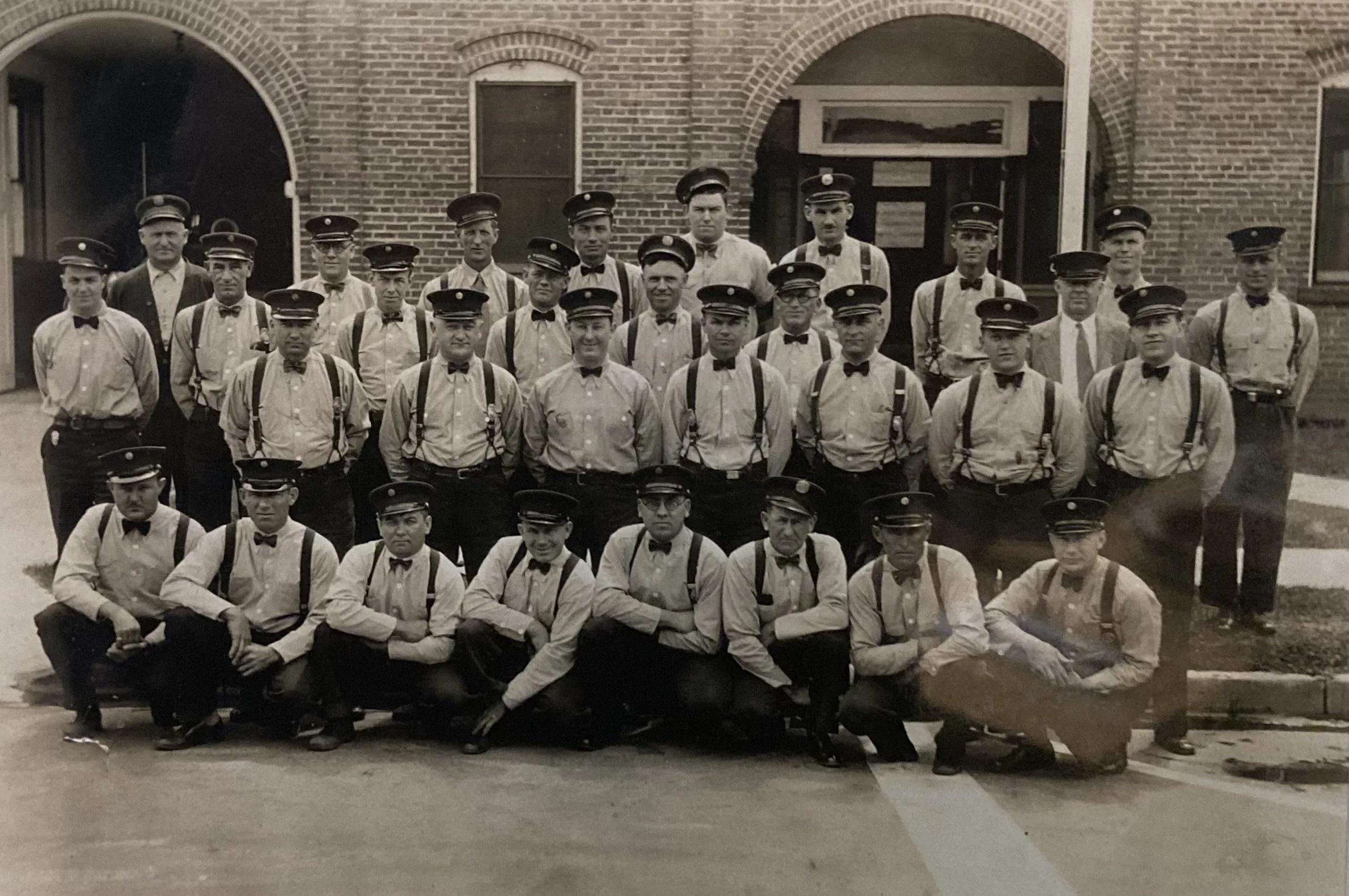
In spite (or because) of the adversity during the construction phase, over 110 years later the small but mighty building still stands. The original layout included offices for the city clerk, the city engineer, the superintendent of public utilities, the fire department and a bay for fire department equipment like the hook-and-ladder and hose wagons on the first floor. Upstairs, there was a meeting room for the Board of Trustees and a room for the firemen’s sleeping quarters.
In the decades following the opening of the new building, Lodi residents saw many global, national, state and local changes. Throughout the first World War, the 1918 Flu Pandemic, Prohibition and many other potential difficulties, Lodi continued to grow and thrive. The City Trustees met regularly at the new City Hall to engage with Lodi’s citizens, discuss the City’s many issues and to make key decisions to ensure the ongoing wellbeing of its people and infrastructure. Some of the key endeavors accomplished by the City and its residents during this time included:
Opening of Lodi Union High School in 1913
Construction of the Jail behind City Hall in 1914
Establishment of the first city park named for Mayor Frank O. Hale in 1916
Building of Lincoln School in 1916
Founding of Farmers and Merchants Bank in 1916
Introduction of A&W Root Beer in 1919
Building of a second Fire Station at Maple Square west of the railroad tracks in 1922
Opening of Garfield School in 1923
Super Mold Company produced the world’s first successful tire retreading mold in 1926